

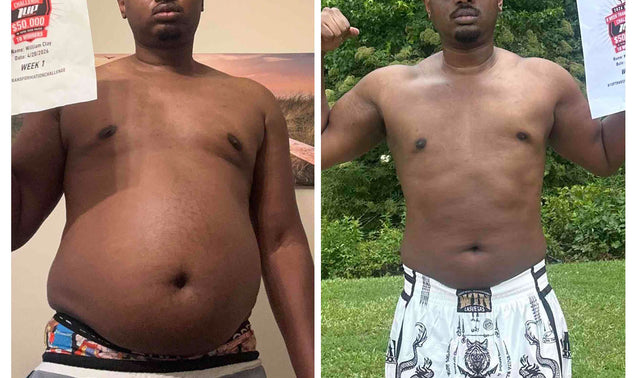


Fat loss is simple on paper.
Burn more calories than you consume.
But biologically, it’s more complex.
Your body does not just “burn fat.”
It has to process it, transport it, and convert it into usable energy.
If you understand that pathway, you understand how to support it intelligently.
Step 1: Stored Fat Is Broken Down
Body fat is stored as triglycerides inside fat cells.
When you are in a calorie deficit or increasing energy demand through training, your body signals those fat cells to release fatty acids.
Now those fatty acids are available.
But available does not mean used.
Step 2: Fatty Acids Must Be Transported
Long-chain fatty acids cannot simply enter the mitochondria on their own.
The mitochondria are the energy-producing structures inside your cells.
They are where fuel is oxidized to produce ATP, your body’s energy currency.
To reach the mitochondria, long-chain fatty acids require transport.
This is where L-Carnitine plays a critical role.
Step 3: L-Carnitine Helps Deliver Fat for Oxidation
L-Carnitine helps shuttle long-chain fatty acids into the mitochondria, where they can be oxidized to produce energy.
In simple terms:
It helps move fat to the place where it can actually be burned.
Without efficient transport, fatty acids are less likely to be used effectively for energy production.
This process is especially relevant during:
- Calorie deficits
- Endurance training
- High-volume workouts
- Cardio sessions
When energy demand rises, the body increases reliance on fat as a fuel source.
Step 4: Fat Is Converted Into Usable Energy
Once inside the mitochondria, fatty acids undergo oxidation.
This process produces ATP.
ATP fuels:
- Muscle contractions
- High-intensity performance
- Aerobic activity
- Daily movement
Fat loss is not about sweat.
It is about fuel conversion.
The more efficiently your body can use fat for energy, the better you can support performance while dieting.
Why Stimulants Are Not the Same Thing
Many fat burners focus on:
- Increasing heart rate
- Increasing body temperature
- Suppressing appetite
While these may slightly increase calorie expenditure, they do not directly support fatty acid transport.
They stimulate the nervous system.
They do not optimize the transport mechanism.
That is a fundamental difference.
Supporting Fat Utilization Strategically
If your goal is to:
- Maintain performance while cutting
- Support aerobic capacity
- Reduce fatigue during dieting
- Use fat more efficiently as energy
Then supporting the transport step makes sense.
1UP L-Carnitine 3000 Liquid delivers 3,000mg of L-Carnitine per serving in a convenient liquid format.
It is designed to support:
- Fat utilization
- Energy production
- Aerobic performance
- A non-stimulant approach to fat metabolism support
No jitters.
No crash.
No nervous system overload.
Just targeted support for the pathway that turns fat into energy.
The Bottom Line
Fat loss is not magic.
It is a sequence of biological steps.
Release the fat.
Transport the fat.
Oxidize the fat.
Produce energy.
When you understand the science, you stop chasing sensation and start supporting function.
If you want to fuel your body to use fat as energy, support the process that makes it possible.


