

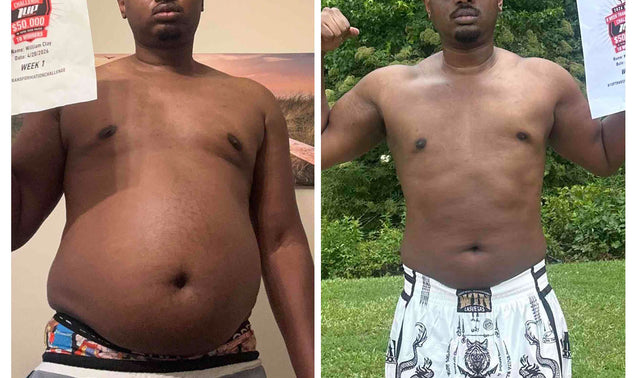


Are you struggling to build muscle, lose fat, and see results from your hard work in the gym? You’re not alone. Millions of people face the same struggles, and, unfortunately, give up on their healthy eating and exercise program out of frustration.
But, the difference between getting results and not, isn’t as big as you think. A key part of increasing performance and recovery is optimizing your protein intake.
Today, we’ll discuss why protein is important for getting results, the best sources of protein, and how to time your protein intake for maximum benefits.
Let’s start with a brief overview of the three macronutrients (protein, carbohydrates and fats), and why they are important.
Protein, Carbohydrates, and Fat
Your cells require energy. The mitochondria in our cells are responsible for producing this energy, otherwise known as ATP.
But, where does this energy come from?
Macronutrients.
As we just mentioned, there are three main macronutrients -- protein, carbohydrates and fats.
Our bodies digest and absorb these macronutrients to produce the energy needed to fuel essential daily living which includes:
- Respiration
- Metabolism
- Protein synthesis
- Core temperature regulation
- Muscle function
Each macronutrient can fuel a wide range of activities in the body, but to keep things relatively simple (as this isn’t the primary focus of this article…optimizing protein timing is), carbohydrates and fats provide energy while protein fuels tissue repair, recovery and growth.
Protein is expensive, from an energy expenditure standpoint, for your body to burn for ATP, as it first must break down the amino acids and convert them to glucose so they can be burned (“oxidized”) for ATP. As such, it prefers to burn carbohydrates and fat. Carbohydrates are usually burned to perform moderate-to-intense physical activity while fat is the “slow burning” energy source used during rest and low-level activities.
There’s a lot more nuance than we’ve covered when it comes to the different macronutrients, and if you’re interested in learning more about protein, carbs, and fats, click here.
Otherwise, let’s continue our discussion of optimizing your protein intake.
What is Muscle Protein Synthesis?
Muscle protein synthesis (MPS) is the biological process that drives tissue repair, recovery, and muscle growth.
The two primary drivers of MPS are protein intake and resistance training.[1,2]
Protein is made of amino acids, but one in particular is more important than all the others when it comes to stimulating MPS -- leucine. Also known as the “king” of amino acids, leucine is a BCAA that strongly activates the mechanistic target of rapamycin (mTOR) -- the biological switch that turns on protein synthesis. Research indicates that between 2.5-3 grams of leucine is needed to fully stimulate protein synthesis in the body.
But, simply flipping the switch isn’t enough as your body also requires eight other amino acids to fuel and sustain protein synthesis. This family of amino acids is known as the essential amino acids (EAAs). They are amino acids that our bodies cannot produce on its own and must be obtained from whole foods or supplements, such as EAA supplements or protein powder.
As important as protein intake is, research indicates that the spike in MPS from it only lasts ~1.5 hours.[1] It will continue to decrease even if there are plenty of amino acids being supplied. Researchers refer to this as the “muscle-full set-point” phenomenon.[1]
However, resistance training (e.g. lifting weights, push ups, pull ups, etc.) also ignites muscle protein synthesis. Similar to protein intake, though, the spike in MPS from resistance training is temporary. It will eventually decline, and muscle protein breakdown (MPB) occurs.
Now, here’s where things get really interesting. After your workout, MPB is rising while MPS is declining. BUT…when you have your post-workout shake, you’re supplying your muscles with a fresh dose of protein, which reignites MPS and halts MPB, thanks to the spike in insulin that accompanies eating protein and/or carbohydrates.
While protein intake and resistance training are the main drivers of MPS, there is one other factor that can increase MPS. Certain growth factors, such as insulin, growth hormone, and IGF-1, contribute to hypertrophy by activating satellite cell activity. These satellite cells support skeletal muscle recovery and growth.
What Affects MPS?
Muscle protein synthesis is affected by many things. We’ve already discussed how nutrition and resistance training impact MPS, but there are other factors involved as well, including:
Age
The younger you are, the stronger MPS is. Around age 30, as is the case for many things in our bodies (hormone production, wound recovery, etc.), MPS begins to slow down. By age 65, adults experience ~16% less MPS after eating protein. This is known as “anabolic resistance” -- a phenomenon in which our bodies become less efficient at utilizing protein.[3] To counteract this, protein requirements increase as we age, not decrease.
Sleep
Sleep is your secret weapon for getting results. When you don’t get enough sleep (even a single night), hormone signaling is severely disrupted, leaving you hungry, irritable, and sluggish. Sleep deprivation also increases levels of cortisol -- a catabolic hormone that can increase protein breakdown in the body. With that in mind, make sure you’re getting enough sleep each and every night. If you need help getting quality sleep, try using a nighttime relaxation and recovery aid, such as 1UP Beauty Dream or 1UP Super Magnesium, which provide natural ingredients to help you relax, unwind, and achieve the deep, restorative sleep you need to wake up feeling refreshed, naturally energized and ready to tackle the day!
Protein Quality
Above, we mentioned that your body requires certain essential amino acids to stimulate and sustain protein synthesis. Certain protein sources contain all of these EAAs. These are known as “complete” protein sources. Others that are lacking one or more of these EAAs are “incomplete.
Generally speaking, animal proteins (red meat, poultry, wild game, fish, shellfish, etc.) are complete, and plant proteins are “incomplete.” However, combining two complementary plant proteins, such as rice and beans, can form a complete protein. It should also be mentioned that there are a handful of complete plant proteins, such as soy protein and pea protein.
Plant proteins are also known to be less bioavailable compared to animal proteins[4], which means you would need a greater amount of plant protein compared to animal protein to elicit a similar boost in protein synthesis.
Protein Intake
To fully stimulate MPS, you need to reach a certain leucine threshold (2.5-3g). Typically, this means consuming 25-30 grams of protein in a meal. As we mentioned above, the increase in MPS from eating is temporary, even if you continue supplying amino acids into the bloodstream.
Researchers discovered that the body responds best to “pulses” of protein that are evenly spaced throughout the day (~ every 3 hours). This would equate to having 3-6 meals per day, depending on your preference and calorie needs.
As for how much protein you need each day, that really depends on your goals. Generally speaking, though, if you’re looking to optimize your protein routine for performance, lean muscle gain, and fat loss, then you want to consume roughly 1 gram of protein per pound of bodyweight.
So, if you weigh 145 pounds, then you want to consume 145 grams of protein per day. Again, you would divide this equally across 3-4 meals. If you need help figuring out your protein needs, we’ve got you covered!
The 1UP Fitness App makes it easier than ever to figure out the right amount of protein, carbohydrates, and fats to eat to hit your goals. Simply download the app, answer a few questions, and you’ll be on your way! You’ll also have access to customized workout programs based on your preferences and individual goals.
Time to Optimize
Timing your protein intake plays an important role in how you perform and how you recover since it supplies the literal building blocks your body needs for repair and growth. The best sources of protein are complete proteins, such as lean red meat, wild game, poultry, fish, and shellfish.
Protein powders also offer a convenient, affordable and effective way to meet your protein requirements. 1UP Nutrition offers a variety of high-quality, lab-tested protein powders that can fit your diet plan.
We offer whey protein, isolate protein, clear protein, and vegan protein in a range of delicious flavors. All of our supplements are manufactured and lab tested for Heavy Metals, Microbiological, Label Accuracy in a NSF/ANSI GMP 455-2 Certified and FDA Registered and inspected facility so that you can rest assured you’re using the best quality products possible!
References
- Atherton PJ, Smith K. Muscle protein synthesis in response to nutrition and exercise. J Physiol. 2012 Mar 1;590(5):1049-57. doi: 10.1113/jphysiol.2011.225003. Epub 2012 Jan 30. PMID: 22289911; PMCID: PMC3381813.
- Yoshida T, Delafontaine P. Mechanisms of IGF-1-Mediated Regulation of Skeletal Muscle Hypertrophy and Atrophy. Cells. 2020 Aug 26;9(9):1970. doi: 10.3390/cells9091970. PMID: 32858949; PMCID: PMC7564605.
- Paulussen KJM, McKenna CF, Beals JW, Wilund KR, Salvador AF, Burd NA. Anabolic Resistance of Muscle Protein Turnover Comes in Various Shapes and Sizes. Front Nutr. 2021 May 5;8:615849. doi: 10.3389/fnut.2021.615849. PMID: 34026802; PMCID: PMC8131552.
- Hoffman JR, Falvo MJ. Protein - Which is Best? J Sports Sci Med. 2004 Sep 1;3(3):118-30. PMID: 24482589; PMCID: PMC3905294.


